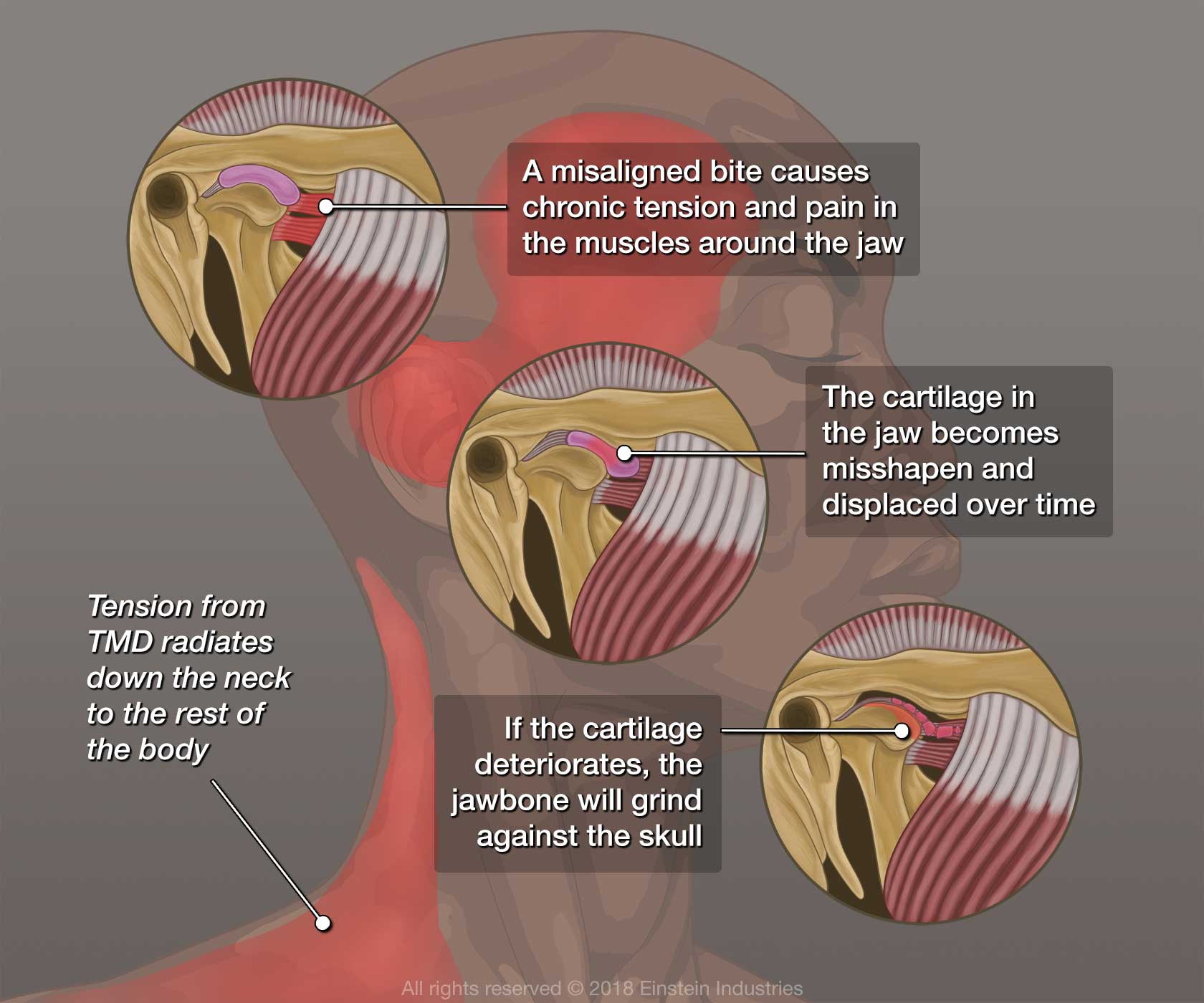
Are you dealing with jaw pain, persistent headaches, or a sore jaw? You may have TMJ disorder.
Dr. Steven Krendl diagnoses and treats TMJ disorder to relieve pain and significantly improve your quality of life.
Find out how we've helped patients throughout Littleton, CO, alleviate their symptoms once and for all...
Short for temporomandibular joint, TMJ is a tiny joint below each ear where your jaw meets the skull. If this joint becomes misaligned or inflamed, patients have TMD (temporomandibular disorders). This can cause a host of uncomfortable symptoms and requires diagnoses and treatment from a dental professional for long-term relief.
Jeffrey Segura
Littleton, CO
2023
Amazing place to go! I was very nervous in the beginning and now it’s a happy experience to get my dental services done
View on GoogleSteve Poos-Benson
Littleton, CO
2022
I had a great experience with Colorado Dental Arts. The staff is friendly, attentive, and professional. Dr. Krendal is a highly skilled and professional Dentist. When I left I had my teeth squeaky clean! Five star recommendation.
View on GoogleTemporomandibular disorders can easily be misdiagnosed, so we highly encourage patients to request a consultation with a dentist such as Dr. Krendl to uncover the cause of their pain. He uses x-rays and other dentistry tools to examine your mouth and jaw to provide an accurate diagnosis. Common symptoms of TMJ and TMD may include:
If TMJ disorder is caused by chronic stress, Dr. Krendl can suggest stress-reduction techniques to help you stop clenching your teeth and tightening your muscles.
For patients with misalignment, our Littleton practice offers Invisalign to improve your bite, position your teeth in the optimal position, and alleviate symptoms of TMD.
In some cases, a nightguard is necessary to prevent teeth grinding at night. This helps stabilize the joints and lessen the amount of pressure placed on the jaw.